
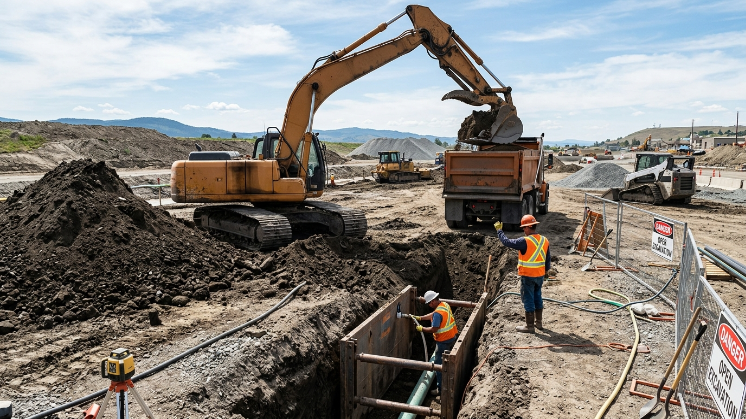
Most property owners figure digging a hole just involves driving a yellow machine onto the grass and tearing up dirt. But if you are breaking ground in MetroWest, you are dealing with tight property lines, unpredictable New England ledge rock, and strict local run-off laws. Winging it usually ends with a cracked water main or a shut-down order from the town inspector. Investing in reliable Excavation Services in Natick, MA means you are paying for site management, legal compliance, and precision grading, not just a guy operating a backhoe.
The Critical First Step: Site Layout and Utility Verification
You can’t just drop an excavator bucket into the ground the morning the crew rolls up. Before any heavy diesel engines start cranking, a legitimate team spends time preparing the perimeter.
First, they handle the legal side of digging. The company works with Dig Safe to mark out existing gas lines, old water pipes, and buried electrical conduits. Hit one of those because you skipped verification, and you face massive fines and neighborhood power outages. Securing an initial Excavation Services in Natick, MA means the crew physically stakes out the exact footprint of your build, establishes the proper benchmarks for elevation, and sets up silt fencing to stop loose mud from washing into your neighbor’s yard during the next heavy rain.
Heavy Earthmoving and Foundation Prep
Once the ground is marked and the utility lines are safe, the real dirt work begins. The crew switches over to heavy bulk digging to reshape your topography.
- Digging for Foundations: The operators systematically scoop out earth to create a precise trench for your new concrete foundations or full cellar hole.
- Handling Ledge Rock: If the bucket strikes solid New England granite, the team brings in hydraulic hammering attachments to break up the stone cleanly.
- Managing Subgrade Soil: The crew strip away organic topsoil and stores it safely, digging down to the structural subsoil layer that can actually support heavy weight.
Whether you are prepping a site for new home construction or digging out a small footprint for major home additions, getting a structural Excavation Services in Natick, MA ensures the basement walls won’t shift or settle due to poorly compacted dirt underneath the slab.
Trenching for Modern Underground Utilities
Digging for a house is only half the battle. You also have to hook that house up to town infrastructure, which requires deep, perfectly pitched trenches running across your lot.
Opting for a precision Excavation Services in Natick, MA allows operators to cut clean utility trenches down past the local frost line. This prevents your water intake pipes from freezing solid during brutal January snaps. The crew digs out targeted pathways for your main sewer hookups, electrical conduits, and drainage lines. They backfill the trenches using specific gravel layers to protect the pipes from crushing under the weight of driving cars or future flatwork / concrete pours.
Final Grading and Lot Drainage Control
The last part of the job kicks off once the primary building frame is up. If you leave messy, uneven dirt piles sitting around the perimeter, you are practically begging for a flooded basement during the next heavy storm.
Booking a final Excavation Services in Natick, MA brings the compact skid steers back to the lot to handle the crating site preparation and finish grading. The operator shaves down the earth to create a sharp slope going away from your new home construction walls. This physical pitch forces heavy rainwater to sheet off toward town drainage lines instead of pooling up against your fresh foundation. Once that grade is dialed in and packed tight, the ground is 100% ready for driveways, walkways, or hydroseeding.
FAQs
How do operators avoid tearing up buried pipes?
Nobody guesses out in the field. Contracting a permitted Excavation Services in Natick, MA means the office logs a formal ticket with Dig Safe before any iron rolls off the trailer. The utility companies then come out and mark the exact paths of the lines with colored spray paint so the operator can safely dig around them.
Where does all the excavated dirt and rock actually go?
It depends on what the bucket pulls out. If the soil is clean and structural, the crew saves it on-site to backfill around the concrete foundations later. But if the hole throws up massive granite boulders or unusable clay, heavy dump trucks haul that material out of your way to a commercial aggregate yard.
Can heavy machinery dig in tight spots right next to an existing building?
Yes. For close-quarters work like home additions or tricky property demolition jobs, the team switches to compact mini-excavators. These smaller rubber tracks exert barely any ground pressure, letting the operator work right up against an active foundation without causing structural vibrations.
What happens to the timeline when the weather turns ugly?
Heavy rain turns a clean job site into a useless swamp, which completely destroys your soil compaction. If the dirt gets waterlogged, a proper crew will pause operations for a day or two to let things dry out. This stops your future flatwork / concrete or foundations from settling on top of unstable mud.