

For homeowners, the process of a new septic system installation Metrowest MA can seem daunting. Between navigating Massachusetts Title 5 regulations, deciphering local town requirements, and budgeting for a major investment, it’s easy to feel overwhelmed before the first shovel even hits the ground. The uncertainty around costs and the challenge of finding a dependable contractor only add to the stress. This isn’t just another home improvement project; it’s a critical piece of infrastructure for your property, and you need it done right the first time.
That’s why we’ve created this straightforward guide. We are breaking down the entire installation process into clear, manageable steps—from initial soil testing and engineering design to choosing the right local installer and passing the final inspection. Our goal is to provide you with the knowledge and confidence needed to manage your project effectively. By the end of this guide, you will have a realistic understanding of the timeline and budget, and you’ll know exactly what to look for in a qualified, trustworthy partner for the job.
Key Takeaways
- Understand the essential Massachusetts Title 5 regulations and soil testing requirements that form the foundation of any compliant installation.
- Follow a clear, step-by-step roadmap of the project lifecycle, from initial site evaluation and design to final inspection and approval.
- Identify the key factors that influence the final cost of a septic system installation Metrowest MA, allowing you to budget with confidence.
- Learn the critical questions to ask and credentials to verify when choosing a qualified and dependable local septic contractor for your property.
First Steps: Understanding Septic Systems and Metrowest MA Regulations
For many properties in our community, a private septic system is a self-contained wastewater treatment facility and a critical piece of your home’s infrastructure. Before beginning a new septic system installation in Metrowest MA, it is essential for homeowners to understand the core components of the system and the strict regulations that govern its design and function. This foundational knowledge ensures your project starts on solid ground.
The Core Components of a Modern Septic System
A modern septic system is a highly effective, multi-stage process that treats wastewater right on your property. While the detailed science of how a septic system works involves natural bacterial decomposition, its operation relies on three dependable components working in sequence. Getting the job done right means ensuring each part is correctly sized, sited, and installed.
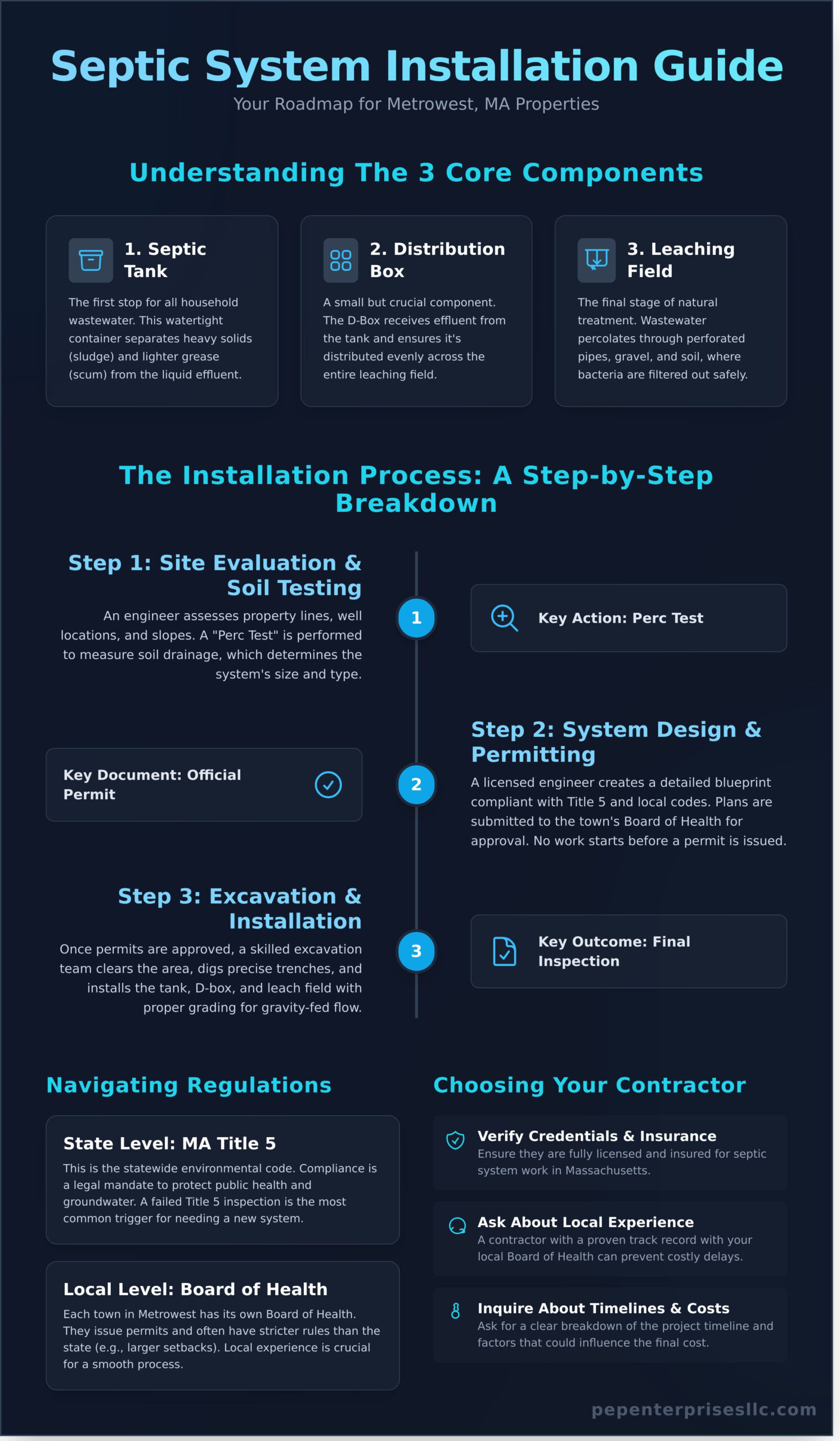
- The Septic Tank: This watertight container is the first stop for all household wastewater. Here, heavy solids settle to the bottom to form sludge, while lighter fats and grease float to the top as scum. The liquid wastewater, or effluent, stays in the middle.
- The Distribution Box (D-Box): Effluent flows from the septic tank to the D-Box. This small but crucial component is designed to evenly distribute the wastewater to the different pipes in the leaching field, preventing any single area from becoming oversaturated.
- The Leaching Field: Also known as a drain field, this is where the final, natural treatment occurs. Effluent flows through a network of perforated pipes into layers of gravel and soil, where harmful bacteria are filtered out before the water safely returns to the groundwater system.
Why Title 5 is Critical for Metrowest Homeowners
In Massachusetts, all septic systems are regulated by the State Environmental Code, commonly known as Title 5. The primary purpose of these regulations is to protect public health and the environment by preventing contamination of groundwater and surface water. A Title 5 inspection is legally required when you sell your property, and a “failed” inspection is the most common reason homeowners need to invest in a new system. Compliance isn’t optional—it’s a legal mandate that directly impacts your property’s value and safety.
Navigating Local Board of Health Requirements
While Title 5 sets the statewide standard, your project’s specific requirements are determined at the local level. Every town in the Metrowest area, including Framingham, Natick, and Wellesley, has its own Board of Health that issues permits and approves designs. These local boards often have regulations that are stricter than the state code, such as larger setback requirements or specific material preferences. This is why working with an experienced contractor who has a proven track record with local health agents is invaluable for a smooth and successful project.
The Installation Process: A Step-by-Step Breakdown for Metrowest Properties
Understanding the full project lifecycle of a septic system installation turns a daunting task into a series of manageable steps. From the initial soil evaluation to the final sign-off, the process is a coordinated effort between a civil engineer, a dependable excavation contractor, and the local Board of Health inspector. Here’s a straightforward breakdown of what to expect, setting realistic timelines while accounting for potential weather delays.
Step 1: Site Evaluation and Soil Testing (Perc Test)
The first, and most critical, step is understanding your property. A site evaluation assesses key factors like property lines, well locations, and landscape slopes to find a suitable area. Following this, an engineer conducts a percolation or “perc” test. This involves digging test holes to measure how quickly water drains through the soil. In Metrowest, where soil can range from sandy loam to dense clay, this test directly determines the size and type of leach field your property can support.
Step 2: System Design and Permitting
With the soil data in hand, a licensed engineer designs a septic system tailored to your property and household needs. This detailed blueprint must comply with all local and state codes, most importantly the Massachusetts Title 5 regulations. The completed plans are then submitted to your town’s Board of Health for review and approval. It is essential to understand that no ground can be broken until this official permit is issued.
Step 3: Excavation and Component Installation
Once permits are secured, the physical work begins. This is where a skilled excavation team is crucial for a successful septic system installation in Metrowest MA. The process involves carefully clearing the designated area, digging precise trenches for the tank and leach field, and ensuring proper grading for gravity-fed flow. Key components are then installed with precision:
- The septic tank
- The distribution box
- Leach field pipes or chambers
Every part is placed according to the engineer’s exact specifications. See how our excavation expertise ensures a flawless installation.
Step 4: Inspection and Final Approval
Before any part of the system is buried, the local Health Agent conducts a mandatory on-site inspection. They meticulously verify that every component has been installed exactly as specified in the approved engineering plans. This crucial quality check ensures your system is built to last and function safely. Once the inspector grants approval, the system is carefully backfilled, the site is graded, and the project is officially complete.
Factors Influencing Septic System Costs in the Metrowest Area
One of the first questions every homeowner asks is, “How much will this cost?” When it comes to a septic system installation in Metrowest MA, there is no one-size-fits-all answer. The final price is determined by a unique set of variables specific to your property. While it can be tempting to choose the lowest bid, a cheap quote often leads to expensive, long-term problems. A proper installation is a significant investment in your property’s health and value, and understanding the costs upfront is critical.
A professional quote breaks down the project into key components: system design, materials, labor, and permits. The complexity of each component directly impacts the budget.
Site Challenges Common to Metrowest Properties
The unique landscape of the Metrowest region presents specific challenges that influence system design and cost. Properties with poor soil conditions, like dense clay or rock ledge, may require specialized fill and more extensive excavation. Small or steeply sloped lots limit placement options and demand precise site work. Furthermore, a high water table or proximity to protected wetlands often mandates an advanced system to meet strict environmental codes.
Conventional vs. Innovative/Alternative (I/A) Systems
For properties with ideal conditions, a conventional gravity-fed system is the most straightforward and cost-effective solution. This standard system uses gravity to move wastewater from the tank to the leach field. However, when site challenges like those mentioned above are present, an Innovative/Alternative (I/A) system is often required by the Board of Health. These systems use advanced technology to treat wastewater more thoroughly but come with higher upfront installation and ongoing maintenance costs.
What a Comprehensive Quote Should Include
A trustworthy contractor provides a detailed, transparent quote that leaves no room for surprise expenses. We believe in clarity and integrity from the start. Your estimate should clearly itemize every phase of the project, ensuring all work complies with state regulations, which you can learn more about in the official Homeowner’s guide to Title 5 from MassDEP. Look for a breakdown that includes:
- Engineering and Design Fees: The cost for a certified engineer to perform soil tests and design a system that meets all state and town codes.
- Permitting Fees: All necessary permits required by your local Board of Health.
- Materials: The septic tank, distribution box, pipes, sand, stone, and any other required components.
- Labor and Equipment: All costs for excavation, installation, backfilling, and final grading of the site.
A successful septic system installation depends on careful planning and expert execution. At PEP Enterprises, we provide clear, detailed estimates that account for every aspect of your project, ensuring you receive a dependable system built to last.
How to Choose the Right Septic Installation Contractor in Metrowest
You have a state-approved design and a permit in hand. Now comes the most critical phase: choosing the right team to bring that plan to life. The long-term success of your system depends less on the design on paper and more on the skill of the hands in the dirt. A proper septic system installation Metrowest MA requires a contractor with proven expertise, the right credentials, and a deep understanding of site work.
Essential Credentials: Licensing and Insurance
Before you sign any contract, verify the company’s qualifications. A legitimate contractor will readily provide proof of these essentials. Insist on seeing a valid Massachusetts Hoisting License for operating excavation equipment, a specific septic installer license for your town, and certificates for both general liability and worker’s compensation insurance. This protects you, your property, and the workers on site from any potential issues.
Key Questions to Ask Potential Contractors
A reputable installer will be transparent and ready to answer your questions. Don’t hesitate to ask for details about their process and experience. A few crucial questions to start with include:
- How many septic systems have you installed in our town or neighboring communities?
- Can you provide references from recent, similar projects?
- Who is responsible for coordinating with the Board of Health and scheduling inspections—you or me?
- What is your specific plan for protecting my driveway, lawn, and landscaping during the project?
Why Deep Excavation Experience Matters
A septic system installation is 90% expert earthmoving. The work involves far more than just digging a hole; it demands precise grading, soil management, and careful site preparation to ensure everything functions correctly for decades. For a gravity-fed system, even a slight miscalculation in the grade can lead to premature failure. An experienced excavation specialist not only guarantees the system’s stability and function but also minimizes the impact on the rest of your property, leaving you with a clean, stable site once the work is done.
This is where P.E.P. Enterprises stands apart. We are not just septic installers; we are excavation professionals first. Our foundation is built on decades of expert site work, ensuring every pipe is perfectly pitched and every component is set on solid ground. Trust P.E.P.’s 35+ years of excavation experience for your project.
Your Next Steps for a Dependable Metrowest Septic System
Navigating a septic project can feel complex, but it comes down to a few key principles: understanding local regulations, knowing the installation process, and choosing the right contractor. When you need a professional and reliable septic system installation Metrowest MA, partnering with an experienced team is the most critical decision you’ll make for the long-term health of your property.
Since 1987, P.E.P. Enterprises has been that trusted, family-owned partner for homeowners throughout the region. We are fully licensed and insured in Natick and surrounding towns, bringing unmatched expertise in the essential excavation and site preparation work that forms the foundation of a durable system. We believe in doing the job right the first time, with the integrity and dependability our community deserves.
Ready to move forward with a team you can count on? Contact P.E.P. Enterprises for a reliable septic installation quote in Metrowest.
Take the next step with confidence, knowing your property is in capable hands.
Frequently Asked Questions
How long does a typical septic system installation take in Metrowest MA?
A typical septic system installation in Metrowest MA involves 3 to 5 days of on-site construction work. This includes excavation, setting the tank, and building the leach field. The entire process, from initial soil testing and system design to securing local permits, can take several weeks. We manage every step to ensure the project proceeds efficiently and meets all state and local regulations, minimizing disruption to your daily life and property.
What are the first signs that my old septic system is failing?
The earliest signs of septic failure often appear inside your home, such as slow drains, gurgling pipes, or sewage backups. Outside, you might notice foul odors, standing water, or unusually lush, green grass over the leach field area. These are clear indicators that your system is not processing wastewater correctly. Addressing these symptoms promptly with a professional inspection can help you avoid more costly damage and potential health hazards.
Can you install a septic system in the winter in Massachusetts?
Yes, we can perform septic system installations during the winter. While frozen ground and harsh weather present challenges, our experienced team is equipped with the heavy-duty machinery required to excavate properly. The process may take slightly longer and requires careful site management to ensure the ground is prepared correctly. We assess each project individually to guarantee a quality, durable installation, no matter the season, and will always provide a transparent project plan.
What is the average lifespan of a new septic system?
A professionally installed septic system should last between 20 and 30 years, and sometimes longer. The lifespan is directly influenced by the quality of the installation, soil conditions, and, most importantly, consistent maintenance. Systems built with high-quality materials and serviced regularly are a dependable, long-term investment for your property. Following a proper maintenance schedule is the best way to maximize the longevity of your new system and prevent premature failure.
What kind of maintenance does a new septic system require?
A new septic system requires simple but consistent maintenance to ensure its health and longevity. The most important task is having the tank pumped every 3 to 5 years to remove solid waste buildup. Additionally, it is crucial to be mindful of what you put down your drains. Avoid flushing anything other than human waste and toilet paper, and keep grease, oils, and harsh chemicals out of the system to protect its essential bacterial environment.
Do you handle the removal of the old septic tank as well?
Yes, we handle the complete decommissioning of your old septic tank as part of our comprehensive installation service. Once your new system is active, we will pump the old tank empty. In accordance with local health codes, we will then either crush the tank in place and fill it with clean gravel and soil or fully excavate and haul it off-site for proper disposal. Our goal is to leave your property safe, clean, and fully compliant.